How to Write a Landing Page Brief That Matches the Ad It Comes From
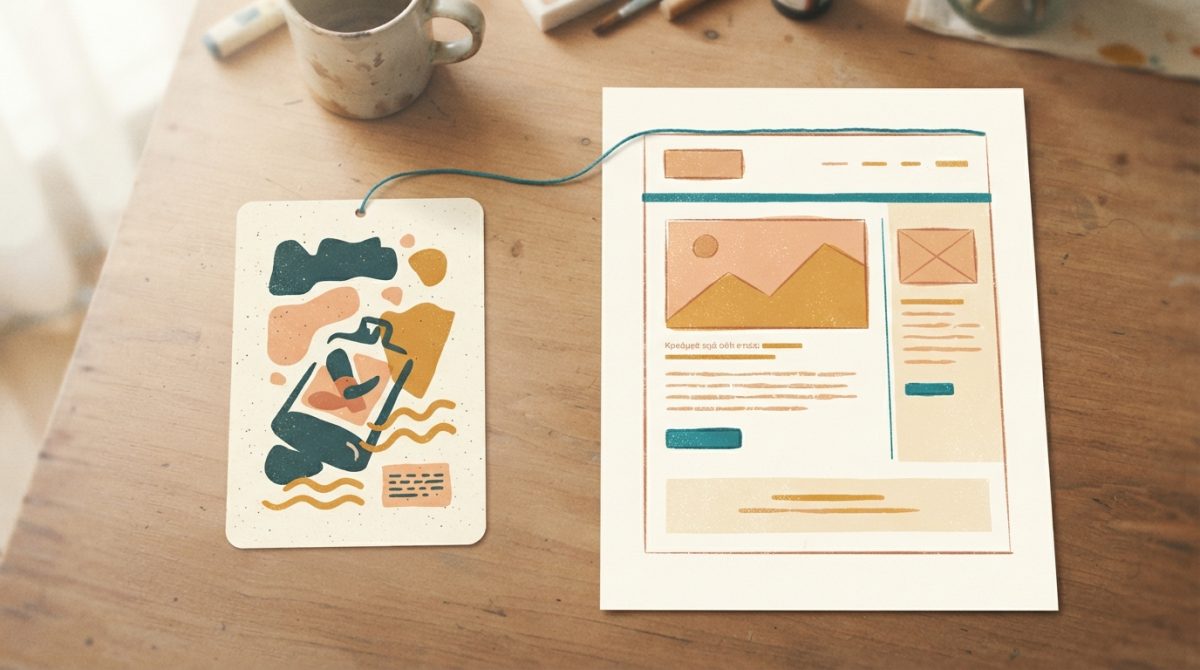
A landing page brief that matches its ad starts from the ad, not from the website. Write down the buyer the ad speaks to, the promise in its headline, the objection it raises and the action it asks for, then make the first screen of the page repeat that promise in the same words and answer that objection.
Populica is a campaign research and creative tool for small marketing teams and agencies: one research run drafts 8 to 16 buyer personas specific to a company's product, website and sector, each with goals, an objection and the language that buyer would use, and a six-step campaign studio turns those personas into strategy, ad drafts and a launch document. That research is the raw material for the method below, because a landing page brief is easier to write when the persona, the promise and the objection are already on paper. The guide covers what a landing page brief is, which elements have to carry over from the ad, a step-by-step process, how many pages a small campaign needs and how to check the match before any budget is spent.
What is a landing page brief and why should it start from the ad?
A landing page brief is a short document that tells the writer and designer who will arrive on a page, what they were just promised and what the page must get them to do. The brief should start from the ad because the visitor arrives carrying the ad's words in their head: they clicked a specific promise aimed at a specific worry, and the page has a few seconds to confirm they are in the right place. When the page is briefed from the company's homepage instead, it usually opens with the general brand message, and the visitor who clicked "same-week office cleaning, no contract" lands on "cleaning solutions for every business" and has to search for the offer. Starting from the ad keeps the promise, the buyer and the next step identical across the click.
What has to carry over from the ad to the landing page?
Five elements have to carry over from the ad to the landing page, and the table pairs each ad element with the part of the page that must repeat or answer it. The example column uses a hypothetical office cleaning company running an ad to small office managers, so the wording is illustrative rather than a tested result. A brief that fills every row before any copy is written gives the writer a fixed target, and a reviewer can check the finished page against the same table line by line.
| Ad element | What the landing page must do | Hypothetical example |
|---|---|---|
| Buyer the ad speaks to | Address the same buyer in the headline or first line | Office managers at offices of 10 to 50 people |
| Promise in the ad headline | Repeat the promise in the page headline, in the same words | Same-week office cleaning, no contract |
| Objection the ad raises or implies | Answer it on the first screen, before the form | "Switching cleaners means a long contract and a messy handover" |
| Proof the ad hints at | Show the specific proof, close to the claim it supports | A clear cancellation policy and the start date in writing |
| Action the ad asks for | Offer exactly that action as the main button | Book a walkthrough this week |
Need the buyer, the promise and the objection before you write the brief? Enter a company name and sector and get three buyer personas, each with the objection that is stopping them from buying. No account, no card.
Draft my audience free →How do you write a landing page brief from an ad, step by step?
Writing a landing page brief from an ad takes five steps, and the order matters because each step depends on the one before it. The process assumes the ad already exists or is drafted, which is the normal sequence for a small campaign: the ad is where the buyer and promise get decided, and the page follows. If the ad was written from a researched persona, as in how to turn a researched persona into three ad headlines, most of the brief can be copied straight from that work. One page brief usually fits on a single sheet, and anything longer tends to become a homepage brief again.
- Paste the final ad into the top of the brief: headline, body, image description and button text.
- Name the one buyer the ad speaks to and the trigger moment that made them click.
- Copy the ad's promise word for word as the required page headline, and list any words the page must not change.
- Write the objection the buyer still has after clicking, and the specific proof that answers it.
- State the single action the page asks for, matching the ad's button, and remove every competing link from the first screen.
How should a landing page brief handle objections and proof?
A landing page brief should handle objections and proof by naming one objection per page and pairing it with the most specific proof the business can honestly show. The ad has already made a promise, so the visitor's next thought is a doubt about that promise, and the page that answers the doubt early keeps the visitor reading. Objections are easier to name when they have been collected in advance, using a method like the one in how to build a customer objection list before writing ads. Proof does not have to be a case study: a written guarantee, a clear price, a named process step or a sample of the deliverable can all answer a doubt, and how to write a campaign proof section with no case studies lists options for businesses without testimonials yet.
How many landing pages does a small campaign need?
A small campaign needs one landing page for each distinct promise it runs, not one page for each ad variation. Two ads that test different headlines for the same buyer and the same offer can share a page if the page headline matches the promise both ads make. Two ads aimed at different buyers, such as an office manager worried about disruption and a finance director worried about cost, need separate pages, because each buyer clicked a different promise and carries a different objection. For most small campaigns that means one to three pages, which keeps the build manageable. Choosing which buyers get a page is the same decision as choosing which channels to run, covered in how to choose ad channels by the buyer's trigger moment.
Why does a brief built from a researched persona beat a landing page template?
A brief built from a researched persona beats a landing page template because a template supplies the sections and a persona supplies what goes in them. A generic landing page template asks for a headline, benefits, testimonials and a call to action, and the writer fills those boxes with the company's own vocabulary, which is rarely the vocabulary in the ad that earned the click. A brief built from the persona carries the buyer's trigger, objection and phrases, so the page headline, the proof and the button all speak to the person who actually arrived. Templates remain useful as a checklist of sections, and the same split between structure and research is explained in campaign brief vs prompt template.
How do you check that a landing page matches its ad before launch?
Checking that a landing page matches its ad before launch takes a short side-by-side review rather than a tool. Put the ad and the first screen of the page next to each other and ask a colleague who has not seen either one, ideally someone close to the target buyer, to read the ad and then glance at the page for a few seconds. A suggested pass rule is that the reader can say what the page offers, who it is for and what to do next without scrolling. Then compare the page against the brief table: same promise in the headline, the objection answered above the form and the same action on the main button. Any mismatch is cheaper to fix now than after the first week of paid clicks.
Populica's Free plan covers 1 company and 1 project with 1 audience research run, 10 AI creative drafts and 20 persona chat messages a month, no credit card required.
Start free →Frequently asked questions
What is a landing page brief?
A landing page brief is a short document that tells the writer and designer who will arrive on the page, what the ad just promised them and the single action the page must get them to take. It usually fits on one sheet and includes the final ad, the buyer, the promise, the objection, the proof and the main button.
What does message match mean between an ad and a landing page?
Message match means the landing page repeats the promise of the ad that sent the visitor, in the same words, to the same buyer, with the same action on the main button. A visitor who clicked a specific offer should see that offer on the first screen without scrolling or searching.
Should every ad have its own landing page?
No. A small campaign needs one landing page per distinct promise, not per ad variation. Ads that test different headlines for the same buyer and offer can share a page. Ads aimed at different buyers with different objections need separate pages, which for most small campaigns means one to three pages.
What should go on the first screen of a landing page?
The first screen should repeat the ad's promise as the headline, name or clearly address the buyer the ad spoke to, answer the main objection that buyer still has and show the same action the ad asked for as the main button. Competing links and general brand messages belong further down or nowhere.
How does Populica help write a landing page brief?
Populica runs research on a company's product, website and sector and drafts 8 to 16 buyer personas, each with goals, an objection and buyer language. Those fields map directly onto a landing page brief, and the six-step campaign studio also produces ad drafts, so the ad and the page can be briefed from the same persona.
What does Populica's Free plan include?
Populica's Free plan is $0 a month with 1 company, 1 project, 1 audience research run, 10 AI creative drafts and 20 persona chat messages per month, no credit card required. Paid plans are Starter at $19, Pro at $49 and Agency at $129 a month.
Keep reading
How to Find Customer Language for Ads Without Running Interviews
Six sources of customer language that need no interviews, a five-step method to turn them into a language bank, and three tests that separate real buyer words from marketing vocabulary.
How to Turn a Researched Persona Into Three Ad Headlines
One persona, three headlines, three different reasons to buy. A step-by-step method that uses the buyer's goal, trigger and objection, with a worked example and a way to choose which headline runs first.
How an Agency Can Run a Campaign Kickoff in One Meeting
A one-meeting kickoff works when the research arrives before the call. Five decisions to close, a pre-read checklist, a 60-minute agenda and the follow-up.