Campaign Brief vs Prompt Template: What Each One Can and Cannot Give an AI
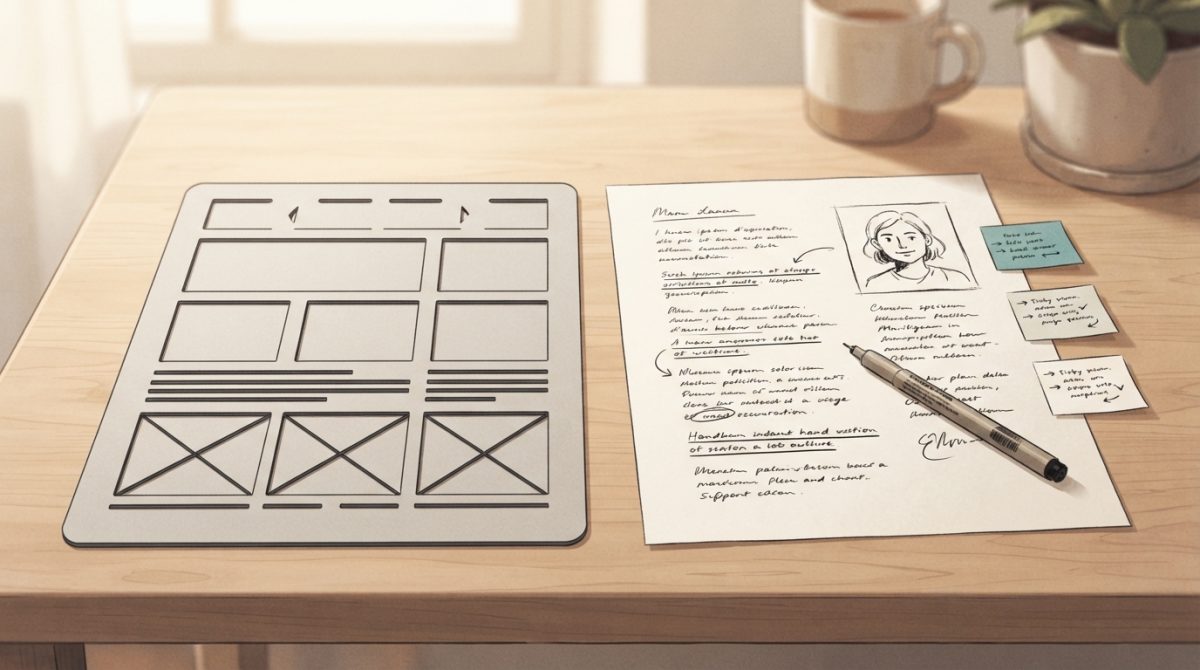
A prompt template gives an AI method: the structure, format, steps and quality checks for a task, reusable across any company. A campaign brief gives an AI knowledge: who this buyer is, what stops them buying, what the brand can prove and what it must never say. Good AI marketing output needs both, in that order of importance.
Populica is a campaign research and creative tool for small marketing teams and agencies: it researches buyer personas for a company from its name, website and sector, then turns them into a campaign brief, ad creative and a launch document. This comparison applies to any AI writing tool, including ChatGPT, Claude, Gemini, Jasper or a custom assistant, because the difference between a prompt template and a campaign brief is a difference in what information reaches the model, not in which product sends it. Teams that confuse the two tend to keep rewriting their template when the real gap is missing buyer knowledge, or keep pasting long briefs with no consistent format and wonder why every draft comes back shaped differently.
What can a prompt template give an AI?
A prompt template, whether it is saved as a skill, a custom GPT, a system prompt or a document of reusable instructions, gives an AI a repeatable way of doing a task. A well written prompt template tells the model what role to take, which output format to return, which steps to follow in which order, and which checks to run on its own draft before answering. Those instructions are genuinely valuable, because a language model follows explicit structure far more reliably than an implied one, and a team that shares one template gets outputs that look alike, can be compared side by side and can be reviewed quickly. The prompt template also saves the time of re-explaining the same task every week. The four things a prompt template reliably supplies are these:
- Format. Headline length, number of variants, character limits per platform, the fields to return and their order.
- Process. The sequence of the work, such as listing angles first, drafting second and self-critiquing third.
- Craft patterns. Hook structures, copywriting frameworks and examples of the shape a good answer takes.
- Consistency. The same instructions for every person and every client, which makes output predictable across a team.
What can a campaign brief give an AI that a template cannot?
A campaign brief gives an AI facts that exist nowhere in its training data and nowhere in a shared template: the specific buyer this campaign targets, that buyer's current situation, the objection most likely to stop them, the proof the brand can legally and truthfully claim, and the words or promises the brand never uses. A language model can only work with what is in its context, so when those facts are missing the model fills the gap with the most typical answer for the category, which is why so much AI copy reads the same. Our guide to why AI-written ad copy comes out generic explains the mechanism. A prompt template cannot carry this knowledge by design: a template reusable across every client must leave out everything that is true for only one of them, and that leftover is exactly the knowledge that makes a campaign specific.
Campaign brief vs prompt template: side-by-side comparison
The table below compares a prompt template and a campaign brief on what each one actually delivers to the model, including the rows where the prompt template is the better tool.
| Prompt template (or skill) | Campaign brief | |
|---|---|---|
| What it gives the AI | Method: role, format, steps, self-checks | Knowledge: buyer, situation, objection, proof, limits |
| Can it tell the AI who is buying? | No, only that a buyer section should exist | Yes, that is its main job |
| Can it stop invented claims? | Partly: it can say "do not invent", but not what is true | Yes, it lists the proof the brand can actually use |
| Can it keep output format consistent? | Yes, this is where the template wins | Poorly, briefs vary in shape from writer to writer |
| Reusable across clients? | Yes, and that is its real advantage | No, one brief per brand and audience |
| Same for your competitors? | Often, templates are shared, sold and copied | No, it describes your buyer only |
| Goes stale when | The tool or model changes how it reads instructions | The offer, the audience or the market changes |
The fair reading of the comparison is that the prompt template and the campaign brief are not rivals competing for the same slot. The prompt template wins on consistency, speed and reuse, and a team without one will produce drafts in a different shape every time. The campaign brief wins on relevance and accuracy, and a team without one will produce consistent, well formatted copy that could belong to any competitor. The mistake is expecting either one to do the other's job, which is why rewriting a template for the fifth time rarely fixes copy that is generic, and why a longer brief rarely fixes drafts that arrive in the wrong format.
Want to see what the knowledge half of a prompt looks like for your own company? Enter your company name and sector and get three researched personas, each with the objection that stops them buying. No account needed.
Draft my audience free →How can you tell whether your prompt is a template or a brief?
The quickest way to tell a prompt template from a campaign brief is a swap test: take the prompt you actually use, replace your company name with a competitor's name, and read it again. If every sentence is still true, the prompt is a template, however long or detailed it is, and it gives the AI no knowledge that the competitor's AI does not also have. If some sentences become false, such as the buyer's situation, the guarantee you offer, the price or the claim your legal team struck out, those sentences are brief content, and they are the part doing the work of making the output specific. Most teams that run the swap test find their prompt is almost entirely template, with the company name as the only piece of knowledge in it. That result is useful rather than embarrassing, because it shows exactly which section to write next.
How should a brief and a template work together in one prompt?
The prompt template and the campaign brief work best as two separate layers in the same prompt: the template is the container that stays fixed, and the brief is the payload that changes per client or per audience. Keeping the two layers separate means the template can be improved once for the whole team, and the brief can be updated after every campaign without touching the instructions that other clients rely on. A practical order for the layers is this:
- Template instructions first. Role, task, steps, output format and the self-check, written once and shared by everyone.
- The brief, pasted in full. Buyer, situation, objection, usable proof and constraints, clearly labelled as the only facts the model may use.
- The specific request last. Which channel, how many variants and which persona from the brief this draft is for.
Two failure modes break the layering between a prompt template and a campaign brief. The first is a prompt template stuffed with one client's facts, which quietly turns it into an out of date brief that every other client then inherits. The second is a campaign brief padded with formatting rules, which makes the brief long enough that nobody updates it after a campaign teaches the team something new. Keeping each layer to its own job is what lets both improve over time. Our explainer on what a campaign brief is and why most small teams skip it covers what belongs in the brief layer and what does not.
Which one should a small team write first?
A small team should write the campaign brief first, because the brief is the only layer that cannot be downloaded, bought or copied from someone else. Good prompt templates for ad copy, emails and landing pages are widely available, so a team can adopt a reasonable one in an afternoon. A campaign brief has to be researched for each audience: who the buyer is, what they already believe and what would make them hesitate. The campaign brief also survives a change of model or tool, because it is plain language about a buyer rather than instructions tuned to one product, and it makes AI output reviewable, since a draft can be checked against a named objection instead of against taste. If you have no customer data to write that first brief from, our guide to building buyer personas with zero customer data shows how to draft an honest first version.
Populica's Free plan covers one company with one audience research run and 10 AI creative drafts a month, no credit card required. Research the buyer, get the brief, then draft creative that starts from it.
Start free →Frequently asked questions
What is the difference between a prompt template and a campaign brief?
A prompt template gives an AI method: role, output format, steps and self-checks, reusable for any company. A campaign brief gives an AI knowledge about one campaign: the buyer, their situation, the objection that stops them, the proof the brand can claim and what it must never say. The template shapes how the output is written; the brief decides what it is about.
Is a saved skill or custom GPT the same as a campaign brief?
No. A skill, custom GPT or system prompt is a prompt template in a more convenient package. It stores instructions that stay the same across uses. Unless it contains facts about one specific buyer and offer, it adds method, not knowledge, and it gives your AI nothing a competitor using the same skill does not also get.
Can a better prompt template fix generic AI ad copy?
Only partly. A better template makes copy tidier, more consistent and better structured, but generic copy is usually caused by missing buyer knowledge, not missing instructions. If the prompt still contains no specific buyer, objection or usable proof, the model will write a well formatted version of the average ad for the category.
How do I know if my prompt is really a brief?
Run a swap test: replace your company name with a competitor's name and reread the prompt. Every sentence that is still true is template. Every sentence that becomes false, such as your buyer's situation, your guarantee or a claim you cannot make, is brief content. Most prompts turn out to be almost entirely template.
Should the brief go inside the prompt template?
Keep them as separate layers in the same prompt. Put the template instructions first, paste the brief in full as a clearly labelled block of the only facts the model may use, and put the specific request last. Writing one client's facts into the template itself turns it into a stale brief that every other client inherits.
Which should a small agency write first, templates or briefs?
Briefs. Reasonable prompt templates are widely available and can be adopted in an afternoon, while a brief has to be researched for each client and audience. The brief also survives changes of model or tool and makes AI drafts reviewable against a named buyer and objection instead of against taste.
Keep reading
Jasper Alternatives for Marketers Who Need Research, Not Just Copy
Most Jasper alternative lists compare writing tools to other writing tools. If your complaint is that the output reads like anyone could have written it, the replacement you need is research, not a cheaper seat. Verified September 2026 pricing.
SparkToro Alternatives for Audience Research on a Small Budget
No cheap tool reproduces SparkToro's dataset, so the real question is which part of SparkToro you were using. A verified price comparison, and the part of audience research that costs nothing.
AdCreative.ai Alternatives: What to Look at Before You Renew
The right AdCreative.ai alternative depends on whether volume or briefing was your real bottleneck. Verified 2026 pricing, the alternatives grouped by what they replace, and a four-step renewal check.